 how-to
7 Winter Car Wash Frequency Rules That Protect Your Paint
Last Updated: October 30, 2026
Quick Summary
Most drivers should wash their car every one to two weeks in winter, and more often when roads are heavily salted. Winter road salt and brine stay on paint and the undercarriage until removed, so a regular winter car wash protects against rust and paint damage.
- Wash about once a week on heavily salted roads.
- Wash every one to two weeks on lightly treated roads.
- Include an underbody rinse every two weeks when roads are treated.
- Wash only when temperatures stay above freezing long enough for the car to dry.
- After a freezing wash, open and close doors and wipe seals to prevent freezing.
Table of Contents
- How Often to Wash Your Car in Winter by Road Conditions
- Why Winter Washing Matters for Road Salt and Corrosion
- Best Temperatures for Washing and When to Wait
- Washing Your Car in Freezing Temperatures Safely
- How Often to Wash Your Car Undercarriage in Winter
- How to Wash a Car Without Scratching Paint
- Touchless, Soft-Touch and Rinseless Washing: Which Fits Your Winter Routine
- Booking Your Next Touchless Wash at Koala Wash
- Frequently Asked Questions
Winter is hard on a car's paint, and most drivers wash their cars far too little or far too much, so a sensible winter car wash schedule matters. Knowing how often to wash your car in winter depends on the weather, the road treatment, and how much you drive.
The short answer: most drivers in winter should aim for a wash every one to two weeks, and more often when roads are heavily salted. Winter roads are treated with salt and brine, and that residue sits on your paint and undercarriage until it's removed. Here is how to adjust that baseline to your own conditions.
How Often to Wash Your Car in Winter by Road Conditions
Wash more often when roads are salted, and less often when they are dry. A car driven on heavily treated roads may need a wash every week, while a car that stays mostly parked can go a few weeks between washes.
Use this rough guide:
- Heavily salted roads: Wash about once a week
- Lightly treated roads: Wash every one to two weeks
- Dry, untreated roads: Wash about once a month
Watch out: Salt keeps working even when it looks dry. Skipping washes after a snowstorm lets residue sit on the car for days.
Why Winter Washing Matters for Road Salt and Corrosion
Road salt is the main reason winter washing matters. Salt draws moisture and speeds up rust on metal parts, and it can dull paint over time. Water sprayed up from the road carries salt into the wheel wells and under the body, where it's hardest to see.
A regular winter car wash removes that buildup before it can do lasting damage. Rinsing the underside matters just as much as the paint, because most corrosion starts where you can't see it.
Best Temperatures for Washing and When to Wait
Washing works best when temperatures stay above freezing long enough for the car to dry. If water freezes on the paint, locks, or door seals, it can cause damage and make the car harder to use.
As a general rule, wash on a day when the temperature is above freezing and the forecast stays that way for several hours. If it's well below freezing, wait for a warmer day unless the salt buildup is severe.
Washing Your Car in Freezing Temperatures Safely
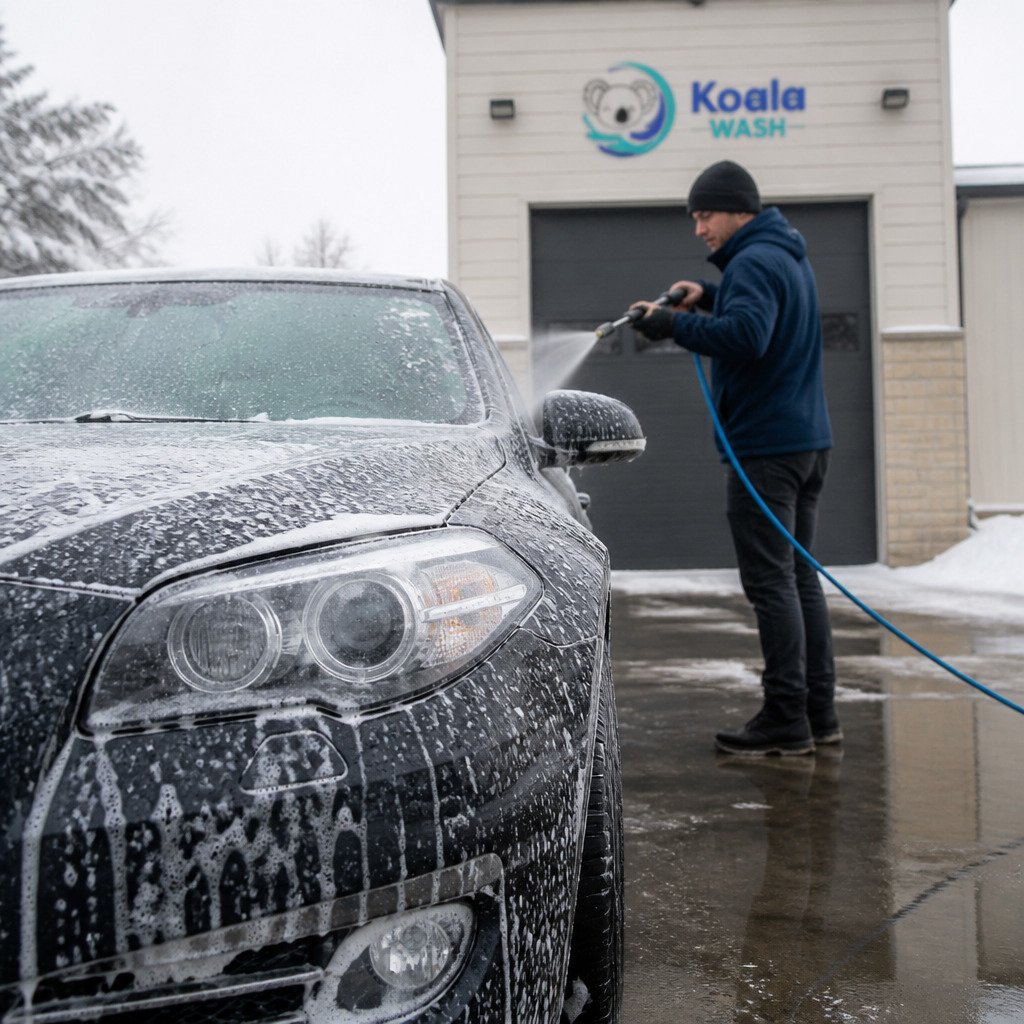
Sometimes you can't wait for a warm day, a fresh layer of brine after a storm is worse for the car than a cold wash done carefully. The goal in freezing weather is to keep water from pooling in places where it can freeze and lock up moving parts. Most practitioners find the risk is highest not during the wash but in the 30 to 60 minutes afterward, when residual water refreezes in door seams, lock cylinders, mirror pivots, and wiper arms.
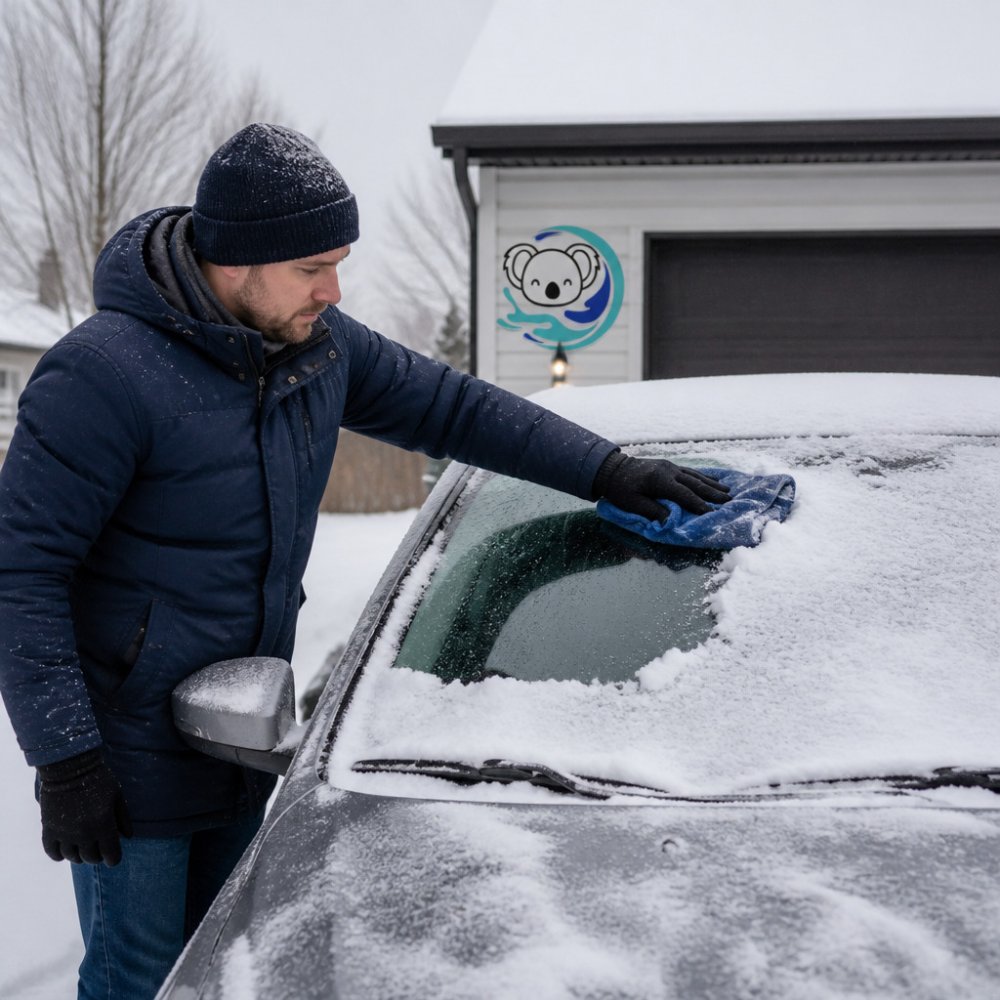
Before you start
- Check the forecast, not just the current temperature. You want at least two to three hours above freezing after the wash so the car can shed water before the overnight drop.
- Confirm the wash you choose has a heated dry cycle or a spot-free rinse. Spot-free rinse uses deionized water, which sheets off instead of beading and leaving droplets that freeze.
- Park facing away from wind if you wash at home; wind chill accelerates refreezing on glass and trim.
During the wash
- Wash from the top down and keep the undercarriage rinse last, so dirty water from the chassis does not splash back onto clean panels.
- Keep high-pressure spray moving and angled, never held in one spot on a seal, badge, or mirror housing. Forced water into those gaps is what freezes and cracks trim.
- Avoid spraying directly into the lock cylinder or the gap between the window glass and the belt molding.
After the wash, the part most drivers skip
- Open and close every door, the trunk, and the hood once while the car is still above freezing. This breaks the surface tension and lets trapped water escape the seams.
- Wipe the door seals, the inside of the door jambs, the fuel-filler door, and the mirror bases with a dry microfiber towel.
- Wipe the wiper blades and lift them off the glass for a minute so the rubber does not bond to the windshield.
- Apply a thin coat of silicone spray or a dedicated rubber conditioner to door and trunk seals, this is the step that prevents the classic "door won't open" morning.
- Do not use the parking brake if the rear brakes are wet and the temperature is dropping; park in gear or Park instead so the pads do not freeze to the rotors.
- Leave the windows cracked a half-inch for the first hour if you park outside, so interior moisture can escape instead of condensing and freezing on the inside of the glass.
Post-wash checks before you drive off
- Confirm all doors, the trunk, and the hood latch close fully and the "door ajar" light is off.
- Test the wipers and washers once; if a blade is stuck, stop and free it by hand rather than letting the motor strip the linkage.
- Check that the side mirrors are not frozen in a folded position before you hit a highway speed.
If the temperature is well below freezing and the roads are dry and untreated, waiting is the better call. But if the car is coated in salt and the forecast offers even a brief window above freezing, a careful wash with a heated dry and a two-minute seal wipe is far cheaper than a frozen door lock or a cracked mirror housing.
How Often to Wash Your Car Undercarriage in Winter
The undercarriage is where winter does its most expensive damage, and it is the part of the car most drivers never look at. Road salt, brine, and the sand-and-salt mix spread on treated roads collect on the frame rails, rocker panels, wheel wells, brake lines, fuel lines, and the rear subframe. Neglecting these hidden crevices accelerates structural decay, making it essential to adopt proactive measures to prevent wheel corrosion before the salt-heavy slush compromises your vehicle's integrity.
A practical undercarriage schedule
A simple rule works for most drivers: every wash during salt season should include an underbody rinse, and the undercarriage should get a dedicated, focused rinse at least once every two weeks when roads are treated. The "every other wash" shortcut only holds if you are washing weekly; if you are washing every two weeks, every wash needs the underbody rinse.
Adjust by condition:
- Heavy salt or brine, daily driving: underbody rinse weekly, ideally within a day or two of a storm.
- Light treatment, mixed driving: underbody rinse every two weeks.
- Dry, untreated roads: a monthly underbody rinse is enough to clear dust and grit.
How to tell when salt and grime actually need removal
Fixed intervals are a starting point, but the car tells you when it needs a rinse. Walk around it after a storm and look for these signs:
Join our Koala Club for a FREE wash →
- White or gray crust along the rocker panels, wheel arches, and the lower edge of the doors.
- A gritty film on the rear bumper and liftgate, the aerodynamic low-pressure zone where road spray collects.
- Streaking on the wheels and tires that does not rinse off with a garden hose.
If you see any of these, do not wait for the next scheduled wash. A quick underbody rinse now is cheaper than a brake line replacement later.
What a good undercarriage rinse actually does
A proper underbody rinse uses high-pressure water directed at the frame, wheel wells, and the area behind each wheel, plus the rear subframe and exhaust hangers. A touchless wash with a dedicated undercarriage nozzle does this in one pass. If you wash at home, a wand attachment on a garden hose works, but only if the temperature is above freezing and you can dry the chassis afterward, a wet chassis in freezing weather is worse than a salty one.
A post-storm checklist
After any snow event or freezing-rain episode, run this quick check within 48 hours:
- Look at the rocker panels and wheel arches for white crust.
- Shine a flashlight under the rear bumper and behind the rear wheels.
- Check the brake calipers and lines for white haze.
- Rinse the underbody if any of the above are present, even if the paint still looks clean.
- Re-check the door seals and drains, since salt and ice often block the sunroof and door drains and cause interior water damage.
That checklist turns "how often" from a guess into a decision based on what the car is actually showing you.
The undercarriage takes the worst winter damage, so use this quick guide to match underbody rinses to road conditions.
| Road condition | Underbody rinse frequency | Priority sign |
|---|---|---|
| Heavy salt or brine, daily driving | Weekly, within a day or two of a storm | White crust on rocker panels |
| Light treatment, mixed driving | Every two weeks | Gritty film on rear bumper |
| Dry, untreated roads | Monthly | Dust on frame rails |
| Coastal or lake-effect areas | Treat as heavy salt year-round | White haze on brake calipers |
How to Wash a Car Without Scratching Paint
Scratches usually come from dragging grit across the paint. Use a clean wash mitt, two buckets if you wash at home, and rinse the car before you touch it.
Touchless, Soft-Touch and Rinseless Washing: Which Fits Your Winter Routine
Each option has a place in a winter routine:
- Touchless washing: Uses high-pressure water and cleaning products without brushes touching the car. Good for paint and ceramic coatings.
- Soft-touch washing: Uses cloth or foam contact. Can remove tough grime but carries more scratch risk.
- Rinseless washing: Uses a small amount of water and a special solution. Useful for quick cleanups between full washes.
Booking Your Next Touchless Wash at Koala Wash
If you want a touchless wash in Omaha, Koala Wash is open 24 hours a day. Our wash bays use brushless, touchless technology, and every wash includes free vacuums and detail stations.
Frequent washers can save with our wash passes, and families can add more vehicles to the same plan. Compare the options on our wash packages and memberships. Join the free Koala Club to get offers and rewards by text, and browse our wash packages to find the right one for your winter routine.
Frequently Asked Questions
Are you supposed to get your car washed in the winter?
Yes. Winter road treatments such as salt and brine stick to the body, wheel wells and undercarriage, and they keep corroding metal and dulling paint until they are removed. A wash during winter is one of the most useful steps you can take to limit rust. The main exception is extreme cold, when a wash can freeze door seals and locks, so timing matters more than skipping the wash altogether. Washing on a milder day, and drying the car well afterward, gives you the most protection with the least risk.
Should you go through a car wash when it's freezing?
You can, but choose the timing carefully. When temperatures stay well below freezing, water can freeze in door seams, locks and on the wipers, so waiting for a day above freezing is usually the safer choice. If you must wash in the cold, use a touchless wash bay with a proper dry-off, open the doors and windows to check that seals are free, and drive a short distance afterward to help the car warm and dry. Avoid washing and parking in a garage that is still cold.
How do you remove road salt from a car in winter?
Use a wash that includes an undercarriage spray, since salt collects on the chassis and in the wheel wells where the body panels do not reach. Rinse before any hand cleaning to lift loose salt and grit, then wash the lower panels and rocker areas thoroughly. A pre-wash rinse and a quick dry help prevent salt residue from drying into spots. Check the underside every few weeks during heavy salting, because salt that is left in place speeds up corrosion on the frame and brake components.
How often should I clean the undercarriage of my car?
During winters with frequent salted roads, washing the undercarriage every one to two weeks is a practical target, and more often if you drive through slush or brine regularly. In milder conditions with little road treatment, once a month is usually enough. Adjust the schedule to what you see: heavy salt residue, mud packed in the wheel wells or a white crust on the frame all signal that a wash is overdue. Regular undercarriage rinsing is one of the most effective ways to slow rust in winter.
Frequently Asked Questions
How often should I wash my car in winter? Most drivers should wash every one to two weeks in winter, or about weekly when roads are heavily salted.
Does a touchless wash remove road salt? A touchless wash with an underbody rinse removes much of the salt that builds up on paint and the chassis.
Is it safe to wash my car when it's freezing? It can be, if you dry the doors and seals afterward and wash on the warmest part of the day when possible.