 how-to
Will a Touchless Car Wash Leave Water Spots?
Last Updated: November 2, 2026
Quick Summary
A touchless car wash can leave water spots, but a spot-free final rinse and prompt drying greatly reduce the risk. Water spots form when hard water or soap residue dries and leaves minerals behind on the paint. Drying the car quickly, ideally in the shade, is the most important step.
- Water spots form when water evaporates and leaves minerals behind on paint.
- Hard water carries calcium and magnesium that leave visible rings when it dries.
- A spot-free rinse reduces minerals but does not dry the car or remove soap.
- Dry your car as soon as you can, ideally within a few minutes.
- Dry in the shade with a clean microfiber towel, and let hot panels cool first.
Table of Contents
- What Causes Water Spots on Car Paint
- What a Spot-Free Rinse Does and Does Not Do
- Choosing the Right Wash Setting to Prevent Spots
- How to Dry a Car After Washing
- How to Remove Water Spots from Car Paint
- Weather, Water Quality, and Vehicle Factors That Affect Spotting
- Booking Your Next Touchless Wash at Koala Wash
- Frequently Asked Questions
What Causes Water Spots on Car Paint
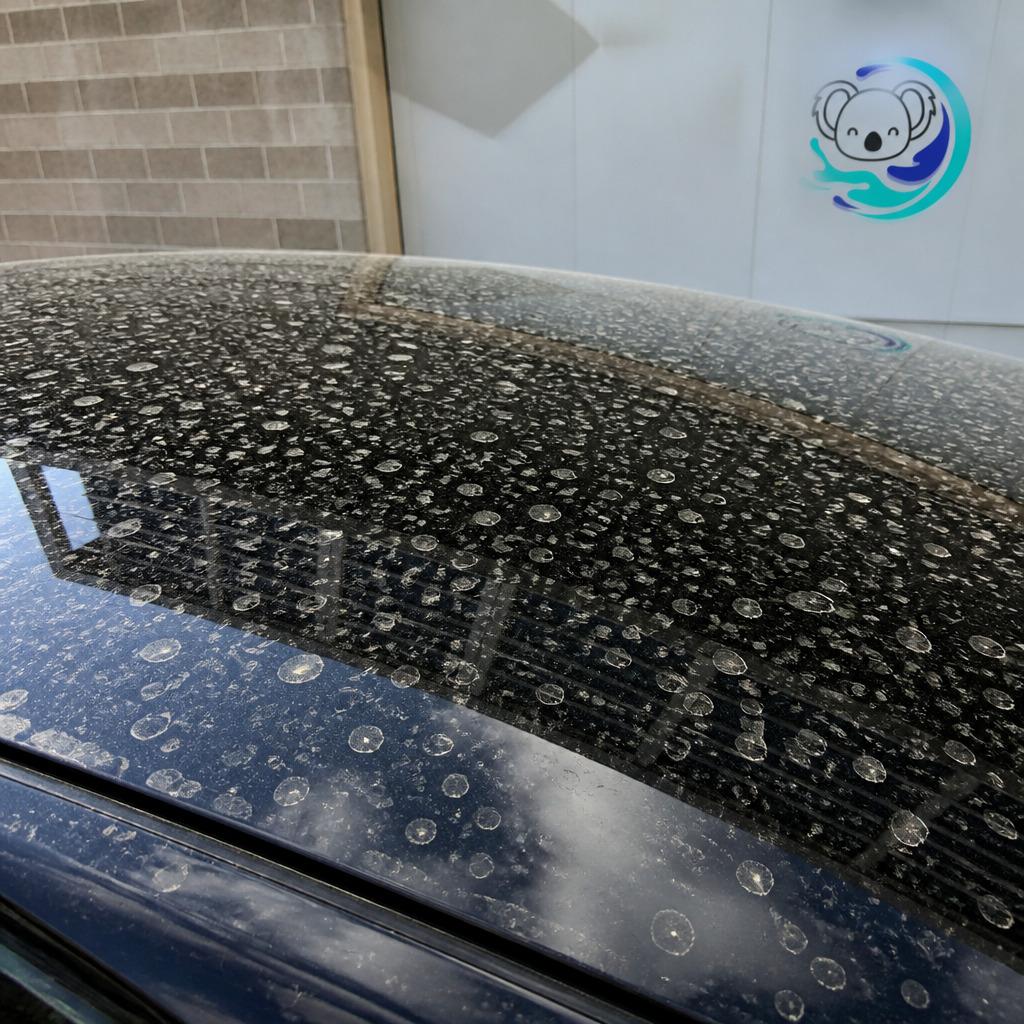
Water spots form when water evaporates and leaves minerals behind on your paint. That is the short answer, and it is the one you need to remember. The rest of this guide shows you how to avoid those spots and how to fix them if they appear.
Most spots come from two sources: the minerals dissolved in your water and the soap or detergent left on the surface after rinsing. Once the water is gone, those solids stay on the paint as a visible ring or film.
Hard Water and Mineral Deposits
Hard water carries high levels of calcium and magnesium (Hardness of Water). These minerals are harmless to drink, but they are a problem on a car. When hard water dries on your paint, the minerals are left behind.
- Hard water is common in many parts of the United States.
- Dark-colored paint shows spots more clearly than light-colored paint.
- Spots left in the sun can etch into the clear coat if they sit for long.
Watch out: Hard water spots that bake on in direct sun can damage the clear coat, not just sit on top of it. Remove them quickly.
Why Evaporation Leaves Residue Behind
Water itself evaporates cleanly. The minerals it carries do not. As each drop dries, the dissolved solids are pushed to the surface and stay there.
This is why a car can look spotless when wet and then show spots an hour later. The spots were in the water all along.
What a Spot-Free Rinse Does and Does Not Do
A spot-free rinse is the final pass in an automatic wash cycle. Instead of tap water, it uses water that has been treated to strip out the minerals, usually calcium and magnesium, that leave visible rings when a droplet evaporates. Spot-free rinse systems use treatment methods such as reverse osmosis, deionization, or softening, and each removes a different share of dissolved solids.
What the rinse actually does is lower the mineral concentration in the water left on your panels. If that water dries in place, there is far less solid material to deposit.
What it does not do is equally important:
Join our Koala Club for a FREE wash →
- It does not dry the car. Spot-free water still has to go somewhere. If it pools in mirror housings, trim channels, or the lip of the trunk and then drips down a panel after you drive away, those drips can still carry dust and road film picked up on the way out.
- It does not remove soap. If the wash cycle left detergent residue, the spot-free pass dilutes it but does not necessarily flush it completely. Soap film that dries looks a lot like a water spot.
- It does not protect the paint afterward. Once you leave the bay, rain, sprinklers, and hard tap water behave exactly as they did before. The rinse only affects the water used inside the wash.
- It is only as good as the system's maintenance. Resin tanks exhaust, membranes foul, and softeners run out of salt. A wash that skips service intervals can pass water that is barely treated while still advertising a spot-free option.
The practical takeaway: choose the spot-free final rinse, then treat drying as a separate job. The rinse reduces what is left behind; prompt drying decides whether anything is left behind at all.
Choosing the Right Wash Setting to Prevent Spots
The wash format you pick changes both how much water stays on the car and how much contact the paint sees. Those are two different risks, and it helps to keep them separate when you are standing at the pay station. Residual moisture often evaporates into mineral deposits that require specific techniques for removing hard water stains from your vehicle surfaces.
Wash types and their spot trade-offs
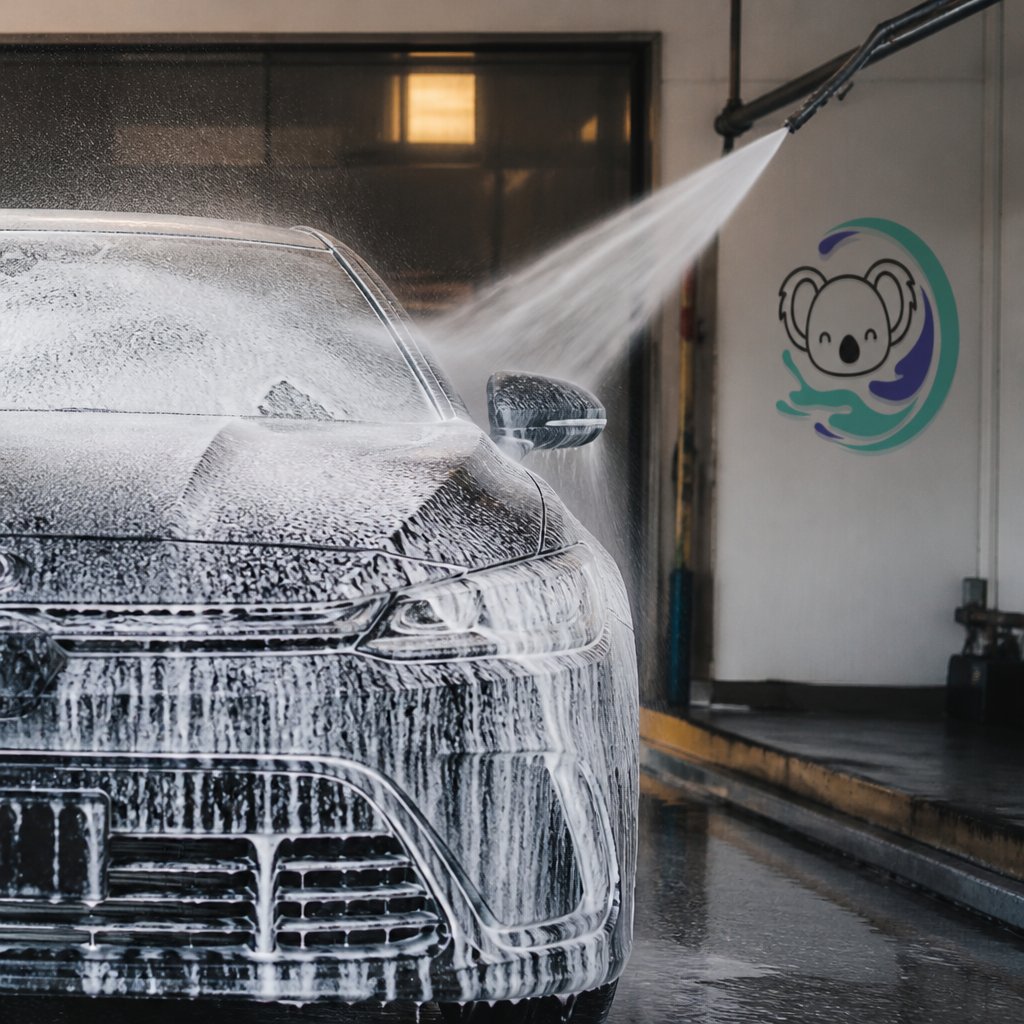
- **Touchless (no-brush) washes rely on high-pressure water and chemistry instead of friction, with no brush contact touching the paint.
- Soft-cloth washes use foam or cloth mitts that physically move water and detergent off the surface. That contact can help clear soap film, but it also means the cloth is the limiting factor: worn, dirty, or poorly maintained cloth introduces scratch risk that has nothing to do with water spots. If you use one, judge the cloth condition before you judge the rinse.
- Self-service bays give you full control over rinse water and drying time, but most use ordinary tap water. Unless the bay offers a filtered or spot-free setting, you are back to drying by hand within minutes of finishing.
Settings and add-ons that actually reduce spotting
- **
- **
- Skip optional wax or sealant add-ons if you plan to dry by hand immediately. They can leave a film that looks like spotting on dark paint if the car is not buffed out.
- Avoid the cheapest cycle on a hot, sunny day. A basic wash with no spot-free rinse and no blower is the highest-risk combination when panels are hot.
Match the setting to your vehicle
Dark paint, fresh paint, and ceramic-coated finishes show mineral residue most clearly, so they benefit most from the spot-free rinse plus blower combination. Light-colored and well-waxed cars are more forgiving, but they still collect spots in the trim, glass, and panel gaps where water hides. If your car has a lot of textured plastic or chrome trim, plan on a quick towel pass around those areas regardless of which cycle you choose.
The wash format you choose changes both how much water stays on the car and how much contact the paint sees.
| Wash type | Spot risk | Key difference |
|---|---|---|
| Touchless | Depends on rinse | High-pressure water and chemistry, no brush contact |
| Soft-cloth | Depends on cloth condition | Cloth moves water off, but worn cloth scratches |
| Self-service | High unless filtered | Full control, but usually tap water |
How to Dry a Car After Washing
Drying is the most important step for preventing spots. Dry the car as soon as you can, before the water has time to evaporate on its own.
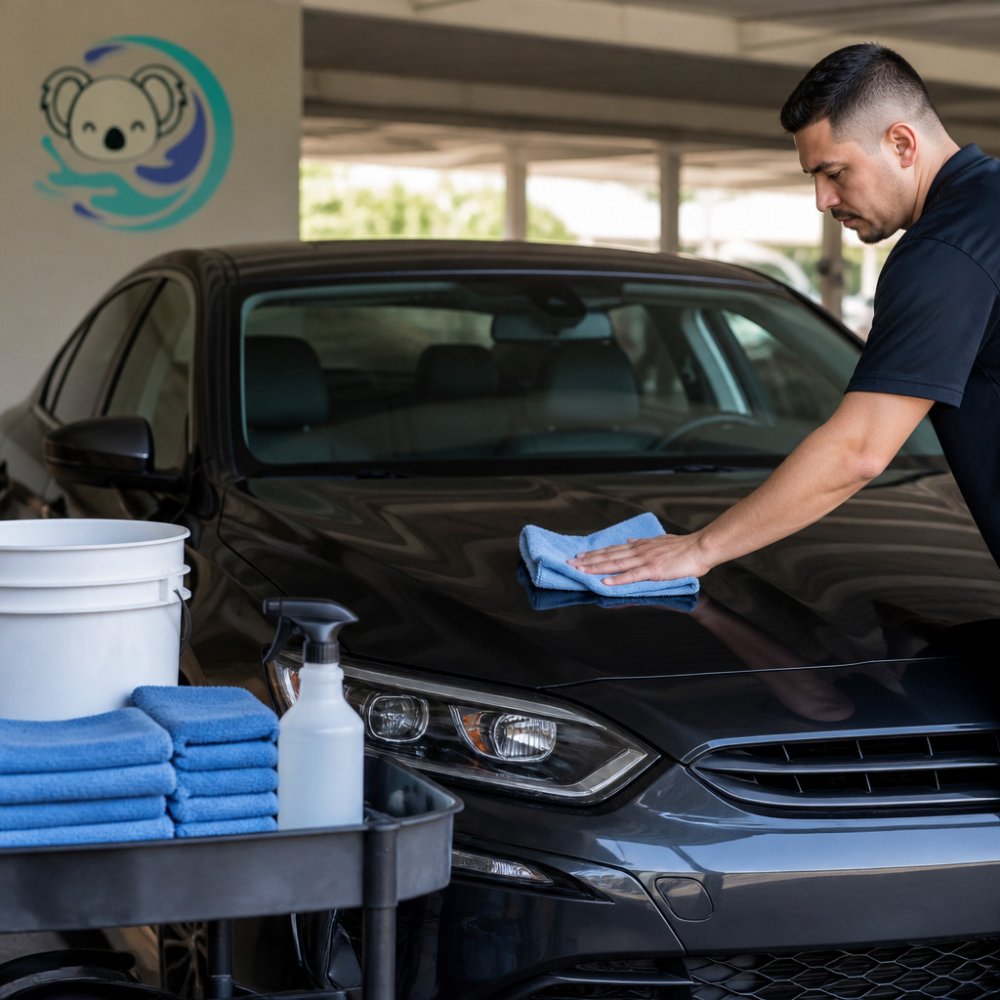
- Pull into a shaded spot or covered area.
- Start with the windows and mirrors.
- Dry the roof, then the hood and trunk.
- Work down the sides, then the lower panels.
- Check the wheels and door jambs last.
Using Clean Microfiber Drying Towels
Use a clean, soft microfiber towel made for drying cars. Dirty or gritty towels can scratch the paint.
- Lay the towel flat and pat or gently drag it across the surface.
- Flip to a dry section of the towel when it gets damp.
- Wash towels separately from other laundry, without fabric softener.
Drying in Shade and Avoiding Hot Paint
Dry your car in the shade whenever possible. Direct sun heats the paint and makes water evaporate fast, which leaves spots behind before you can wipe them.
Do not dry a hot car. Let the panels cool first, or move to a shaded area and wait a few minutes.
How to Remove Water Spots from Car Paint
Fresh spots often wipe away with a damp microfiber towel and a mild car soap. Work in the shade and rinse the towel often.
For stubborn spots, use a spray wax or detail spray made for paint. Avoid harsh abrasives. If a spot has etched into the clear coat, a professional detailer may need to polish it out.
Weather, Water Quality, and Vehicle Factors That Affect Spotting
Your location and the weather matter. Hot, dry days speed up evaporation. Humid days slow it down, giving water more time to sit on the paint.
Join our Koala Club for a FREE wash →
Salt and road grime in the winter can also leave residue that makes spots easier to see. Vehicle factors matter too, such as paint color, paint condition, and whether your car has a protective coating. Newer vehicles and ceramic-coated cars often show spots less, but they still need prompt drying.
Booking Your Next Touchless Wash at Koala Wash
If you want a clean car with less risk of brush marks, a touchless wash is a good choice. Koala Wash is open 24 hours and offers monthly passes for drivers who wash often.
Visit our touchless car wash in Omaha, or see our car wash membership options.
Frequently Asked Questions
Will a touchless car wash leave water spots? It can, especially if the car dries slowly in sun or hard water is used. A spot-free final rinse and prompt drying help prevent spots.
Does a spot-free rinse remove all water spots? No. It reduces minerals left by the rinse water but does not remove existing spots or protect against hard water after you leave.
How soon should I dry my car after a wash? As soon as you can, ideally within a few minutes. Shaded drying with a clean microfiber towel gives the best results.
Frequently Asked Questions
Does a touchless car wash leave water spots?
A touchless car wash can leave water spots, but the cause is usually the water left on the paint after the wash, not the touchless process itself. Spots form when water evaporates and leaves dissolved minerals behind. A spot-free rinse reduces that mineral content, which lowers the chance of spotting. It does not eliminate spots entirely, especially if the car sits in direct sun or dries slowly. Drying promptly after you exit the wash closes the gap that the rinse cannot cover.
Does a spot-free rinse prevent water spots?
A spot-free rinse reduces water spots by lowering the mineral content of the final rinse water. Less residue remains when the water evaporates. The rinse does not remove existing spots, dirt, or soap film, and it cannot stop spotting if the vehicle is left to air dry in hot sun. Pairing the rinse with a quick drying routine gives the best results, particularly for dark-colored paint and vehicles with ceramic coatings.
How soon should you dry your car after a car wash?
Dry your car as soon as you can after leaving the wash, ideally within a few minutes. The longer water sits on the paint, the more time it has to evaporate and leave mineral deposits. Work in the shade if possible, since sunlight heats the panels and speeds evaporation before you can wipe the water away. Use a clean microfiber drying towel and blot or gently pull it across each panel. Start with the roof and windows, then move to the hood, trunk, and sides.
How do you remove water spots from car paint?
Light water spots often come off with a mild car soap, a clean microfiber towel, and gentle pressure. Wash the affected panel, rinse it, and dry it completely. For stubborn spots, use a dedicated water spot remover or a detail spray, following the product label. Avoid abrasive pads or harsh household cleaners that can dull the clear coat. If spots have etched into the paint, a polishing compound may be needed, and a detailer can assess whether the damage is surface-level or deeper.