 how-to
Touchless Car Wash & Ceramic Coating: Safe or Risky?
Table of Contents
- Is Touchless Car Wash Safe for Ceramic Coating?
- How High-Pressure Water and Touchless Wash Chemicals Affect Ceramic Coating
- How to Wash a Ceramic-Coated Car: Step-by-Step Routine
- How Often to Wash a Ceramic-Coated Car
- Ceramic Coating Maintenance Beyond the Wash
- Touchless Versus Soft-Touch and Brush Washes for Coated Vehicles
- Evaluating Wash Chemicals and Settings for Your Coating
- Frequently Asked Questions
Last Updated: October 19, 2026
Is Touchless Car Wash Safe for Ceramic Coating?
The short answer: yes, touchless car wash ceramic coating is generally safe when done correctly.
We know ceramic coatings are a real investment. Touchless technology aligns well with proper maintenance, the key is knowing which settings and chemicals suit your coating.
Your ceramic coating creates a hydrophobic layer that beads water and resists contaminants. It's durable but not indestructible, the real risk is the combination of pressure, chemicals, and timing.
How High-Pressure Water and Touchless Wash Chemicals Affect Ceramic Coating
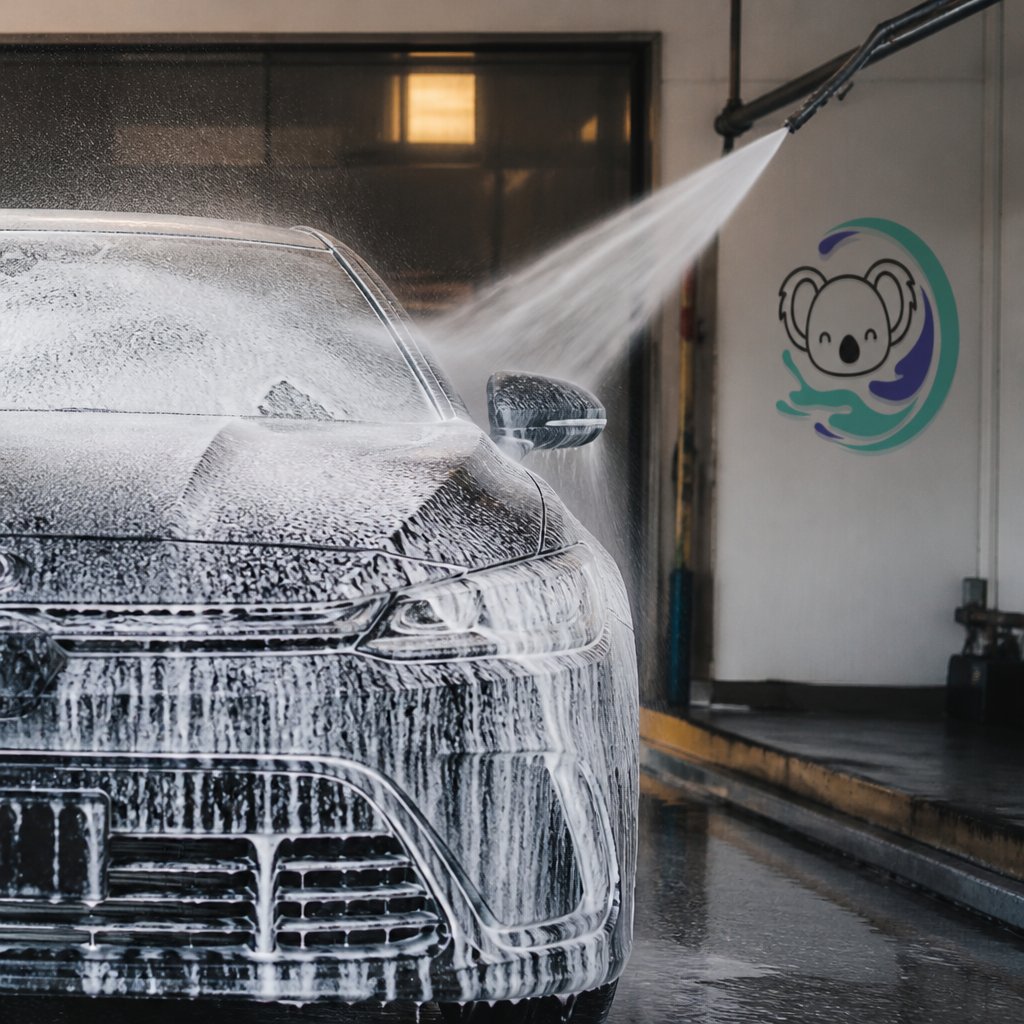
High-pressure water jets are the backbone of touchless washing, blasting away dirt, grime, salt, and bugs without contact. Most systems run 1,500 to 3,000 PSI, a range where the coating stays intact.
The real concern is repeated exposure.
Wash chemicals vary widely. Some systems use gentler alkaline detergents; others use acidic or caustic solutions that are harsher on protective layers.
Pressure forces water into every crevice. That's fine for the topcoat, but water seeping under the clear coat through micro-cracks or panel seams can cause subsurface issues, rare with quality coatings, but worth knowing.
How to Wash a Ceramic-Coated Car: Step-by-Step Routine
The best approach combines touchless technology with smart technique. Here's the routine we recommend.
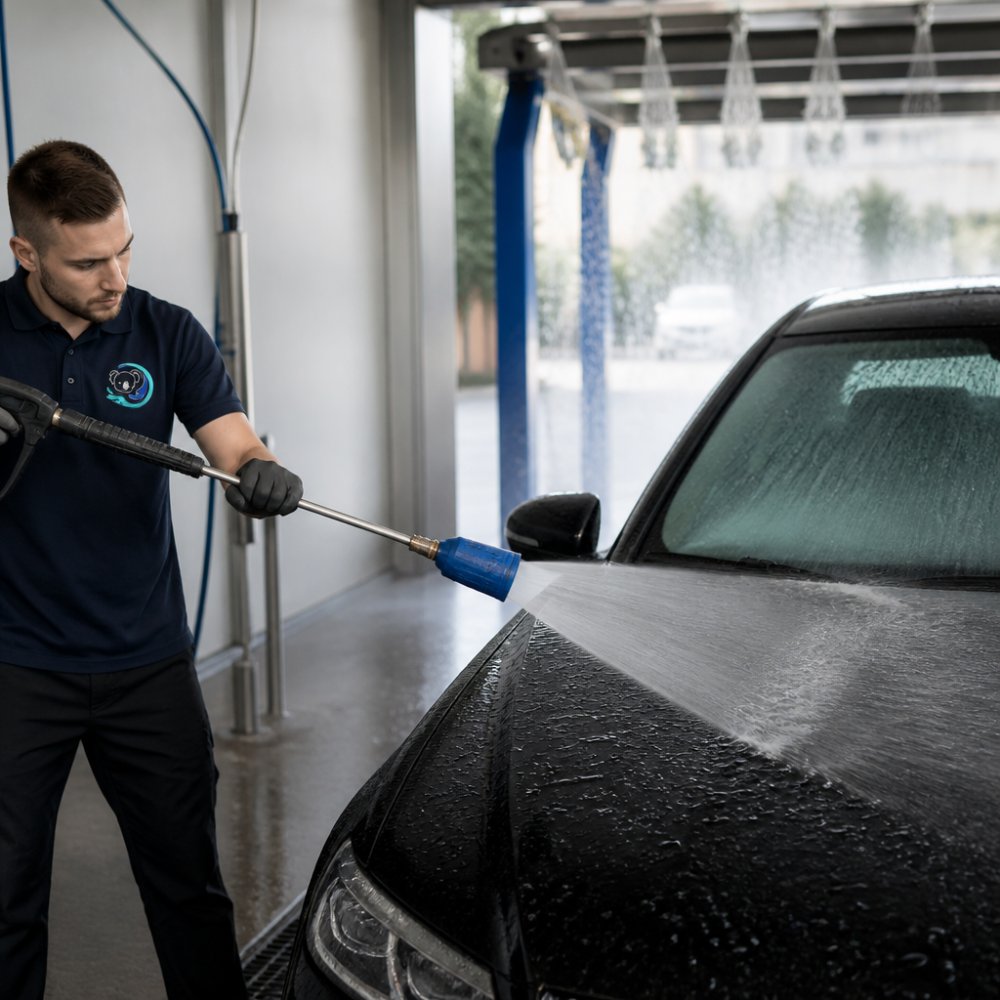
Pre-Wash and Setup
Check coating age first. Under two weeks old: hand wash only. Mature (30+ days): touchless washing is safe.
Rinse before entering the bay to remove loose dirt. Use the pre-rinse setting if available, most systems offer a low-pressure cycle gentler than the main wash.
Choose your wash level carefully.
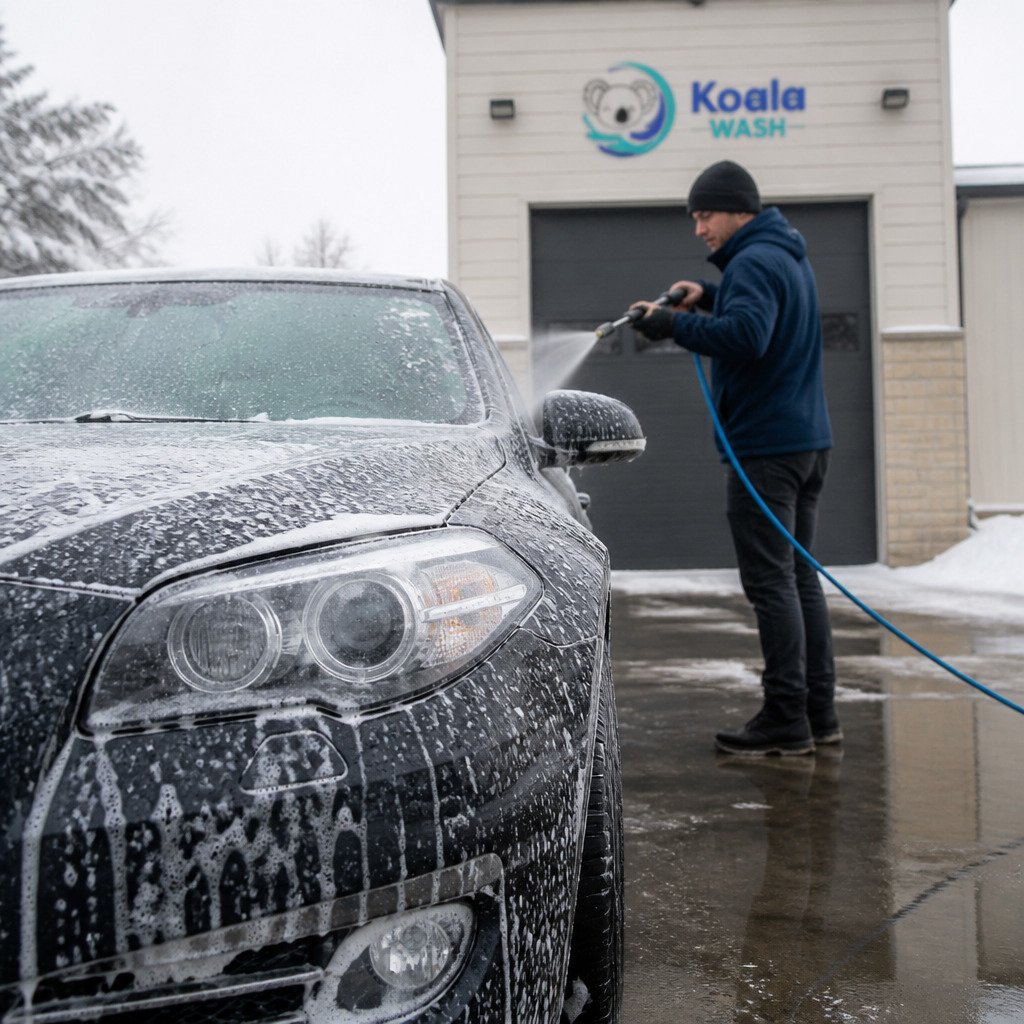
Apply pre-wash foam if offered. It loosens stubborn grime before high-pressure jets hit, and pre-wash solutions are typically pH-neutral and designed for ceramic coatings.
Wash Cycle and Rinsing
Let the system run its full cycle without interruption, the automated sequence balances cleaning power with coating safety.
Watch the rinse cycle, where residue is removed. A thorough final rinse prevents water spots and chemical buildup, use spot-free or deionized water if offered to prevent mineral deposits that dull gloss.
Most touchless washes take 5 to 8 minutes, enough to remove dirt and grime without excessive chemical or pressure exposure.
Drying and Inspection
After the rinse, compressed or heated air dryers remove standing water. Avoid air-dry methods that leave spots, then drive to a dry area and inspect.
Look for water beading on the paint, proper beading means the coating is intact. If water sheets instead, the coating may need attention.
Finish at the free detail stations at Koala Wash.
How Often to Wash a Ceramic-Coated Car
Wash frequency is where most ceramic-coating advice goes wrong. The real question is how much cumulative chemical and pressure exposure you'll accept to remove contaminants, the answer depends on your environment, coating age, and wash strength.
The cumulative-exposure framework
Every touchless wash exposes your coating to three stressors: detergent chemistry, water pressure, and spray action. None is damaging in isolation, risk comes from total dose over time: number of washes multiplied by aggressiveness.
A gentle, pH-neutral wash every 10 days is lower total stress than a heavy-duty, high-alkaline wash every 30 days. The heavy-duty cycle concentrates more chemical and pressure per event, and repeated strong detergents cause premature degradation more often than water itself.
Practical frequency ranges
Detailers and manufacturers commonly recommend washing every two to three weeks under typical conditions, adjusting for exposure:
- Heavy road salt or coastal salt spray: every 7 to 10 days during the season. Salt left on a coated surface bonds to the coating and requires stronger chemistry to remove later, so frequent mild washes beat infrequent harsh ones.
- Industrial fallout, rail dust, or heavy pollen: every 10 to 14 days. These contaminants are acidic or metallic and can etch if left in place.
- Typical suburban driving, garage-kept: every two to three weeks.
Why 'more frequent, milder' wins
The counterintuitive rule: frequent light washes protect a coating better than occasional heavy cleaning. Contaminants that sit oxidize, bond, and become harder to remove. By the time you need a heavy-duty cycle to strip them, you're applying the strongest chemistry and highest pressure, exactly what stresses the coating most.
A mild wash every 10 days keeps the surface clean enough that a standard cycle always suffices, so cumulative chemical exposure stays low despite washing more often.
Join our Koala Club for a FREE wash →
Track two numbers, not one: how often you wash, and how strong each wash is. Keeping both moderate is safer for a ceramic coating than letting dirt build up and then hitting it with a heavy-duty cycle.
Adjusting for coating age and season
A fresh coating is most vulnerable in its first weeks, err toward hand washing or the gentlest touchless cycle. A coating two or more years old benefits from more frequent mild maintenance and inspection rather than stronger washes.
Winter is highest-risk in salt-belt states because de-icers are corrosive and persistent. Summer brings acidic bugs, sap, and droppings to remove within days. Spring and fall are low-stress windows where a two-to-three-week schedule works well.
When to skip a wash entirely
Skip the automatic wash if the vehicle is only lightly dusty, a rinse or waterless wash avoids unnecessary chemical exposure. Also skip after fresh tar or heavy oil; those need a dedicated tar remover by hand, not a cycle that spreads the contaminant.
Ceramic Coating Maintenance Beyond the Wash
Washing is just one part of ceramic coating care.
Apply a ceramic maintenance spray every two to four weeks to refresh hydrophobics and add temporary protection.
Avoid harsh chemicals and acidic products. Wheel cleaners, tar removers, and bug-and-tar solutions can damage ceramic coatings.
Inspect your coating quarterly, checking water beading and gloss levels. If performance drops noticeably, it may need refreshing.
Touchless Versus Soft-Touch and Brush Washes for Coated Vehicles
Touchless car wash technology stands apart from traditional automatic washes.
Brush-based automatic washes use spinning brushes or cloth strips that contact the paint directly, creating micro-scratches and swirl marks over time.
Touchless systems use water pressure and chemicals exclusively, no brushes, no cloth strips, no physical contact.
Hand washing remains the gentlest option. Two-bucket washing with soft mitts and pH-neutral soap minimizes risk. However, hand washing is time-intensive.
| Wash Type | Contact Risk | Chemical Exposure | Best For | Ceramic Coating Safe |
|---|---|---|---|---|
| Brush Automatic | High | Moderate | Budget-conscious, non-coated vehicles | No |
| Soft-Touch Automatic | Low-Moderate | Moderate | General maintenance | Yes, with caution |
| Touchless Automatic | None | Higher | Ceramic-coated vehicles | Yes |
| Hand Wash | None | Low | Maximum protection | Yes |
Evaluating Wash Chemicals and Settings for Your Coating
Not all touchless car washes are created equal, and the differences that matter most for a ceramic coating are rarely printed on the sign out front. Here's a practical method for evaluating any wash, national chain, local tunnel, or membership program, before you drive in.
Read the wash menu like a detailer
Most touchless menus are built around upsells, and several common add-ons are ones you should decline on a coated car:
- Skip optional wax, sealant, and 'ceramic' spray add-ons. These products are designed to leave a film on the paint. On an uncoated car that film is the point; on a coated car it can mask the coating's water beading, attract dust, and interfere with the coating's own hydrophobic layer. If you want a topper, apply a coating-specific maintenance spray yourself so you control the product.
- Skip 'triple foam' or 'super shine' upgrades that add extra detergent dwell time. More foam usually means stronger chemistry sitting on the surface longer, which is the opposite of what a coating wants.
- Choose the standard or gentle cycle unless the car is genuinely heavily soiled. The heavy-duty setting exists for neglected vehicles; a maintained coated car rarely needs it.
What to ask the operator
If an attendant is available, a few direct questions separate a coating-friendly wash from a risky one:
- What's the pH of the main detergent? Neutral (roughly 6.5 to 7.5) is safest. Alkaline detergents in the 9-plus range clean aggressively but stress the coating with repeated use; strongly acidic products are worse. If no one can answer, treat that as a caution flag.
- What pressure does the standard cycle run? Most touchless systems operate in the 1,500 to 3,000 PSI range. Standard cycles tend to sit at the lower end; heavy-duty cycles push toward the top. For a coated car, the lower end is sufficient.
- Is the final rinse deionized? If not, expect spotting in hard-water areas and plan to dry the car promptly.
- Does the wash use any brush or cloth contact at all? Some 'touchless' branding is loose; confirm there are no wraps, mitters, or blowers that contact the paint.
Match the cycle to the soil, not the price
The most common mistake coated-car owners make is buying the top-tier wash because it costs the most. Price correlates with add-ons, not coating safety. Match the cycle to what's actually on the car:
- Light dust or pollen: pre-rinse plus standard wash plus spot-free rinse.
- Road salt or winter grime: standard wash with a pre-wash foam step, then spot-free rinse. Avoid the heavy-duty setting unless the car has gone weeks without washing.
- Bugs, sap, or tar: don't rely on the wash cycle at all. Remove these by hand with a coating-safe bug-and-tar remover first, then run a standard wash.
Red flags that should send you elsewhere
A few signals suggest a wash isn't coating-friendly: detergent that leaves streaks or film after the rinse, a strong solvent smell, no spot-free rinse option, pressure that visibly pushes water under trim or around panel gaps, or a menu that bundles wax and sealant into every tier. None is automatically disqualifying for a single wash, but a pattern means your coating is taking more cumulative stress than it needs to.
Before committing to a membership, run one standard wash and inspect the result. Check water beading on the hood and roof, look for streaks or film, and note whether the final rinse left spots. One wash tells you more about a facility's chemistry than any sign in the lobby.
Frequently Asked Questions
Can touchless car wash chemicals damage ceramic coating?
Touchless car wash chemicals are designed to break down dirt and road grime without harming protective coatings. Most professional touchless systems use pH-neutral or slightly alkaline detergents that are safe for ceramic coatings. However, extremely harsh or acidic chemicals can degrade a coating over time. Always verify the wash facility uses coating-safe products, and avoid washes that advertise "heavy-duty" or "industrial-strength" chemicals if you want to preserve your coating's longevity.
How often should you wash a ceramic-coated car?
Wash your ceramic-coated car every two to four weeks under normal conditions, or more frequently if exposed to salt, road grime, or harsh weather. Regular washing maintains the coating's hydrophobic properties and water beading. Touchless washes are ideal for frequent maintenance because they avoid the friction and physical contact that can wear down the coating. More frequent gentle washes are better than infrequent aggressive ones.
Will a touchless car wash remove my ceramic coating?
No. Touchless car washes use water pressure and chemicals to clean the surface, not abrasive contact. Ceramic coatings bond chemically to your paint and are not stripped by water or standard detergents. Your coating can only be removed through intentional abrasion (like clay bar treatment or compounding) or extreme chemical exposure. Touchless systems are actually one of the safest wash methods for preserving coating durability.
What is the safest way to wash a ceramic-coated car?
Use a touchless car wash with a pre-wash cycle, neutral pH detergent, and controlled water pressure. Avoid brush-based or soft-touch washes that create friction. After washing, dry your vehicle promptly to prevent water spots and mineral buildup. Hand washing with a microfiber wash mitt is also safe if done carefully, but requires more time. Touchless systems eliminate the risk of swirl marks and scratches while delivering thorough cleaning for coating maintenance.
Keeping a ceramic-coated vehicle clean protects your investment in paint protection. Touchless car wash technology offers a safe, effective way to maintain that coating without the risk of brushes or harsh handling. The key is choosing a facility that understands ceramic coatings and adjusts wash chemistry and pressure accordingly. Join our Koala Club for a free wash and discover how touchless technology keeps your ceramic-coated vehicle looking its best.