 comparison
7 Touchless Car Wash Rules for New Car Paint
Last Updated: October 26, 2026
Quick Summary
A touchless car wash is the lowest-risk way to clean a new car because no brush, cloth, or mitt ever contacts the paint, so there is no grit to drag across soft clear coat. Choose a touchless cycle for the first wash, confirm the undercarriage blast, and take the full dry cycle.
- Fresh clear coat is softer than fully cured clear coat, so anything dragging across it can leave marks that never buff out.
- A touchless cycle cleans with chemistry and water pressure, running pre-soak, high-pressure spray, spot-free rinse, and air dry.
- Most body shops advise against washing, waxing, or sealing fresh repaint for roughly 30 to 90 days.
- In salted-road climates, wash every week or two through winter to keep salt from accelerating corrosion.
- Avoid washes advertising aggressive acid or hot wax cycles on a coated car, since they can strip or mask the coating.
Table of Contents
- Why a Touchless Car Wash Is the Safest First Wash for New Paint
- How a Touchless Car Wash Works, Cycle by Cycle
- Automatic Car Wash vs Hand Wash for Paint: What New Owners Should Know
- Touchless vs Soft-Touch Car Wash: Scratch Risk Compared
- How to Wash a New Car Without Scratching It
- Is Touchless Car Wash Safe for Ceramic Coating?
- Choosing a Touchless Wash: Packages, Passes, and What to Check
- Join the Koala Club and Claim Your Free Wash
- Frequently Asked Questions
Why a Touchless Car Wash Is the Safest First Wash for New Paint
A new car's finish is at its most vulnerable in the first weeks of ownership, and a touchless car wash is the lowest-risk way to clean it. At Touchless Car Wash, we have over 13 years of experience in the in-bay automatic car wash industry.
Here is the core problem: your paint's clear coat, the thin transparent layer that carries the gloss, cures gradually after the vehicle leaves the factory. Fresh clear coat is softer than fully cured clear coat. Anything that drags across it, from a spinning brush to a grit-loaded sponge, can leave marks that never buff out completely.
That is why the first wash matters so much. According to the EPA's guidance on vehicle washing and water quality, commercial washing also captures runoff that driveway washing sends straight into storm drains, so a professional wash protects more than your paint.
Below, we will walk through how a touchless cycle actually works, how it compares with hand washing and soft-touch systems, and how to pick the right wash for a car you plan to keep.
How a Touchless Car Wash Works, Cycle by Cycle
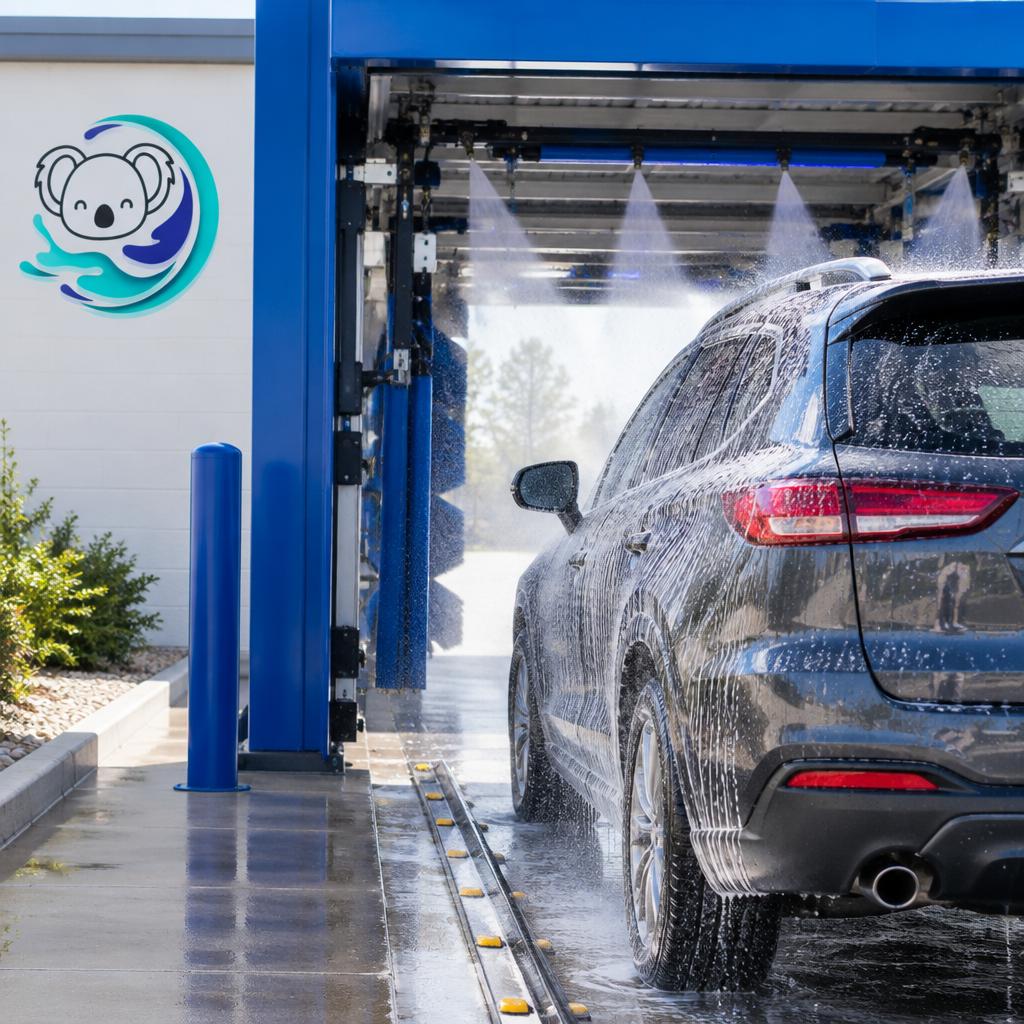
A touchless car wash cleans using chemistry and water pressure instead of friction. No brush, cloth, or mitt contacts the vehicle at any point. The cycle runs in a fixed sequence, and understanding each stage tells you exactly what you are paying for.
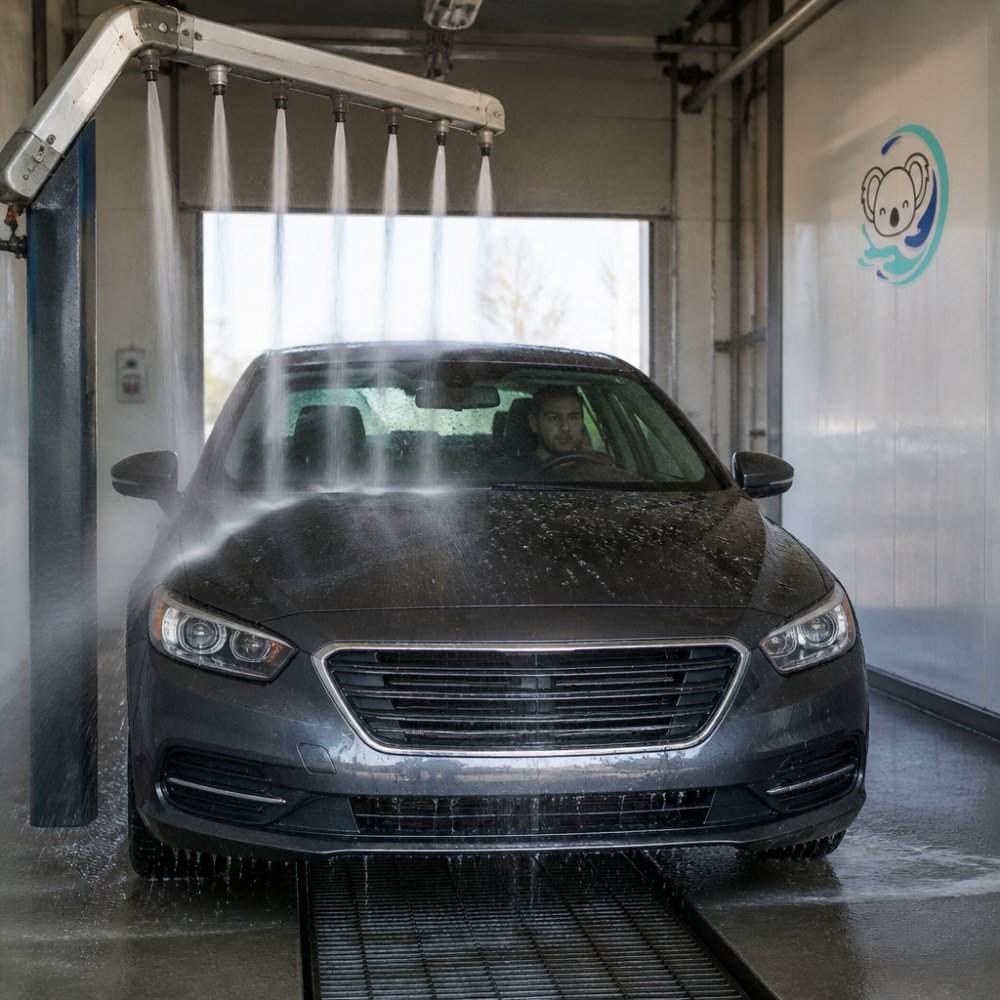
Pre-soak and high-pressure spray
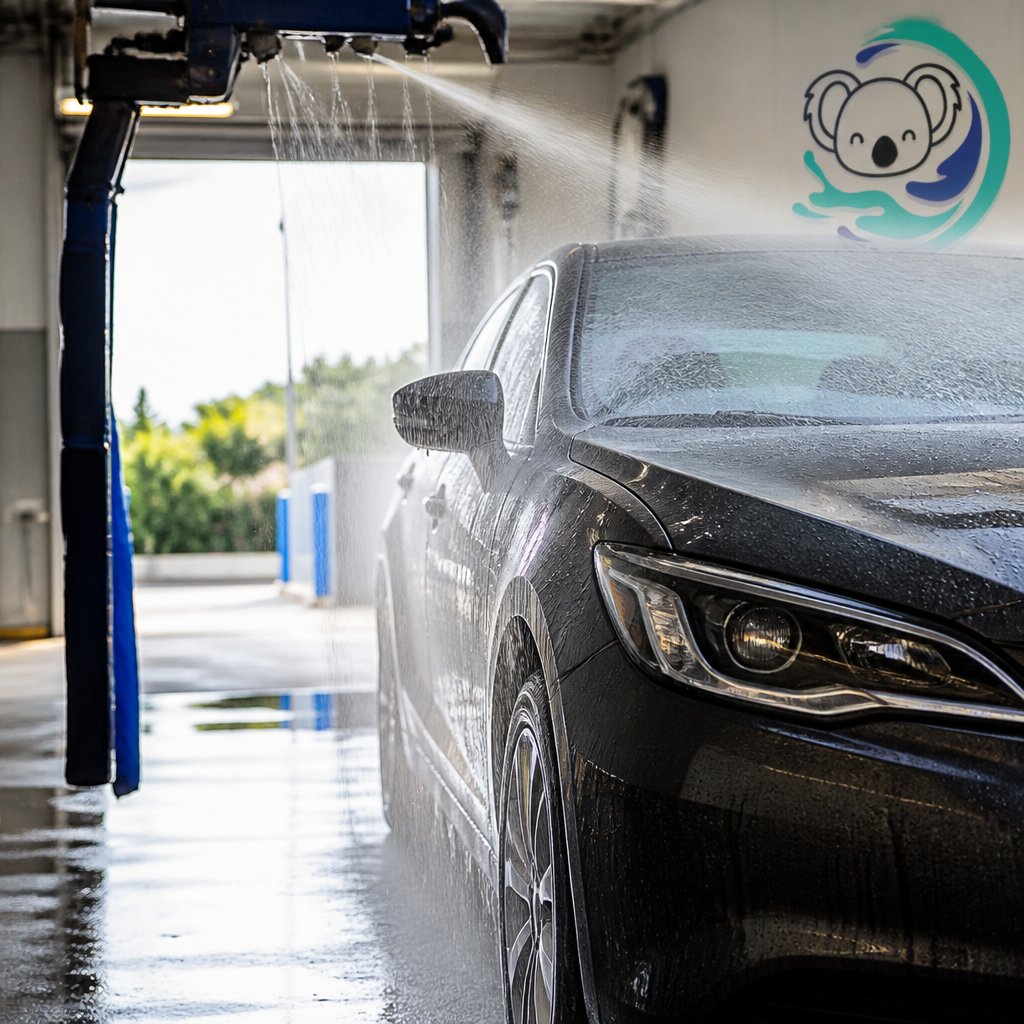
The cycle starts with a pre-soak that loosens road film and grime before any pressure hits the surface. A detergent layer breaks the bond between dirt and clear coat. Then high-pressure spray does the lifting, working from the lower panels upward so clean water always runs over dirtier areas.
An undercarriage blast follows on most systems. This matters more than most drivers realize: road salt and brine collect underneath, and that is where corrosion starts.
Spot-free rinse and power dry
The final rinse uses filtered, mineral-reduced water so droplets dry without leaving hard water spots. Then a high-velocity air dry pushes standing water off the panels and out of the trim gaps.
Automatic Car Wash vs Hand Wash for Paint: What New Owners Should Know
For a new car, an automatic touchless wash is generally safer than a bucket-and-sponge hand wash done by someone without proper technique.
Join our Koala Club for a FREE wash →
The problem with home washing is grit. A sponge or mitt picks up a particle of sand, and every subsequent pass drags it across the paint. A touchless system never holds grit against the surface because nothing touches the surface.
For a deeper comparison, our guide on automatic vs hand wash for paint breaks down the trade-offs for new owners deciding which method to trust.
Touchless vs Soft-Touch Car Wash: Scratch Risk Compared
Soft-touch washes use foam or cloth brushes that contact the vehicle. Touchless systems use only water, detergent, and air. That single difference drives almost every other distinction between the two.
| Factor | Touchless Wash | Soft-Touch Wash |
|---|---|---|
| Contact with paint | None | Brushes and cloth |
| Scratch and swirl risk | Very low | Higher over time |
| Cleaning power on film | Good with pre-soak | Stronger on heavy film |
| Safe for fresh clear coat | Yes | Not recommended |
| Safe for ceramic coating | Yes | Can dull coating over time |
| Best for | New cars, coated cars, dark paint | Heavily soiled older vehicles |
If you want the full side-by-side breakdown, read our comparison of touchless vs friction car wash options.
How to Wash a New Car Without Scratching It
Protecting new paint comes down to timing, frequency, and method. Get those three right and the finish stays glossy for years. The tricky part is that "new car" can mean two very different paint situations, and they call for different rules.
Factory paint versus fresh body-shop paint
A panel that was repainted after a collision or a custom job is a different story. Body-shop clear coat cures at ambient temperature and stays soft for a period that varies by product and conditions. Most shops advise against washing, waxing, or sealing a fresh repaint for roughly 30 to 90 days, and some specify longer. Follow the body shop's written guidance over any general rule you read online. If you are unsure which situation applies, ask the dealer or shop directly.
A first-wash protocol that protects fresh clear coat
- Choose touchless for the first cycle. No brush, cloth, or mitt touches the paint, so there is no grit to drag.
- Confirm the undercarriage blast. It clears road salt and brine from the subframe and rocker panels, where corrosion begins.
- Take the full dry cycle. Pulling out early leaves mineral-laden droplets that can etch soft clear coat in direct sun.
Wash frequency and winter salt
In a climate with salted roads, wash every week or two through winter (AAA Warns Drivers: Winter Road Salt Can Cause Hidden Vehicle Damage). Salt left on panels and underneath accelerates corrosion, and a touchless cycle with an undercarriage blast handles both. In summer, every two to four weeks is usually enough unless the car collects bugs, tree sap, or bird droppings, which should be removed promptly because they are acidic and can stain clear coat.
Our step-by-step guide on how to wash a car without scratching paint covers the full routine, including what to do between washes.
Is Touchless Car Wash Safe for Ceramic Coating?
Yes, with caveats. A touchless car wash is generally safe for ceramic coating because nothing mechanical contacts the surface, but the chemistry and pressure matter.
What the chemicals do to a coating
Ask what chemistry a wash uses before you commit. A simple question at the pay station or a look at the posted service description is usually enough. If the operator cannot tell you, that is a signal.
Water pressure, trim, and sensors
Convertible tops, matte finishes, and vinyl wraps deserve their own check. Most touchless systems are fine for these surfaces, but confirm the detergent is appropriate. Matte paint in particular can be altered by wax-containing products.
Join our Koala Club for a FREE wash →
Wax, sealants, and repeated use
For coated vehicles, we recommend reading our full explanation of touchless washing and ceramic coating, including how to spot early signs of coating degradation.
Choosing a Touchless Wash: Packages, Passes, and What to Check
Picking a wash is easier when you know what to verify. Use this checklist before you commit to a location:
- Confirm the wash is genuinely brushless, with no cloth or foam brushes
- Check for an undercarriage blast if you drive salted roads
- Ask whether the detergent is safe for ceramic coatings
- Confirm operating hours match your schedule
- Compare per-wash pricing against a monthly pass
- Check whether vacuums and detail stations are included
On cost, individual washes vary by market and service tier. You can explore our wash packages and memberships to compare tiers side by side.
Join the Koala Club and Claim Your Free Wash
The challenge with new-car paint is consistency. One careful wash does little; a routine that keeps salt, road film, and bird droppings off the clear coat is what preserves the finish. That is hard to sustain when a wash means finding time in a busy week.
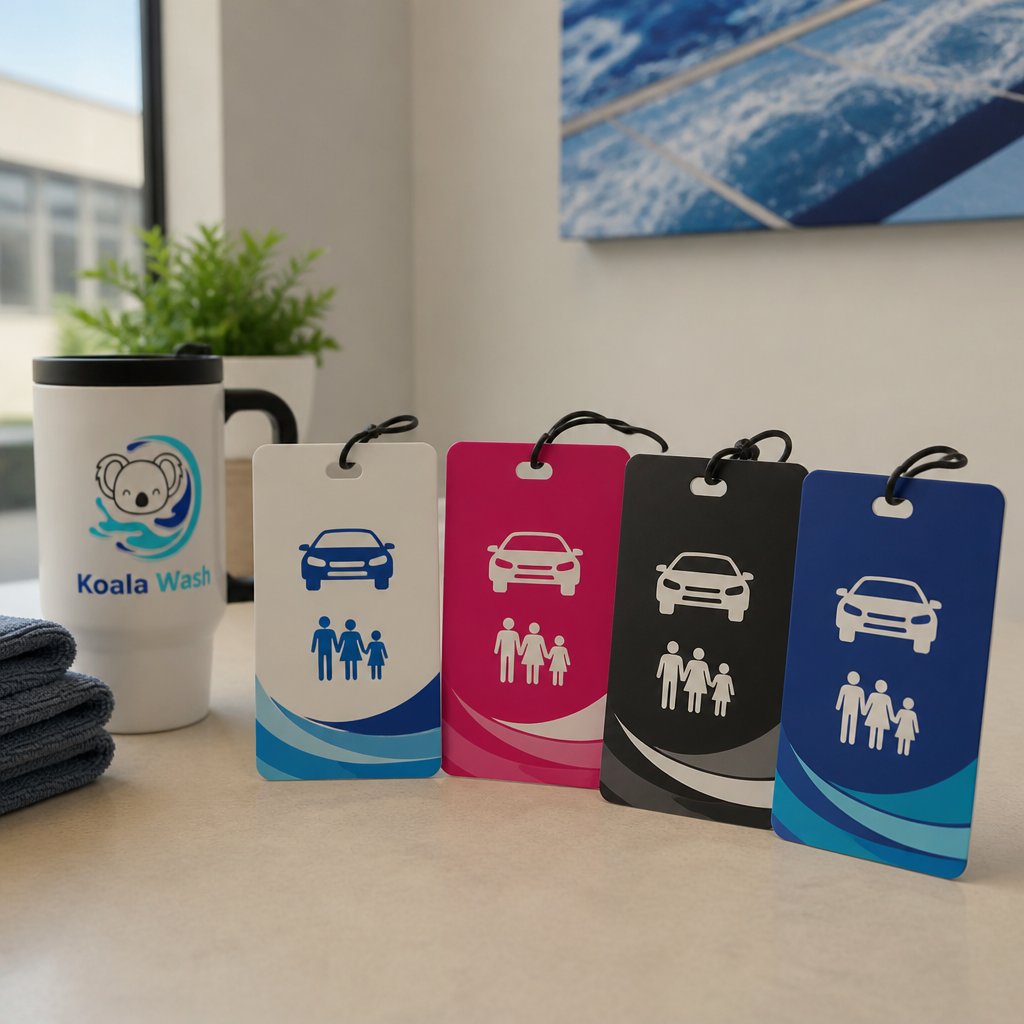
Our brushless system is safe for paint and ceramic coatings, our bays are open 24 hours a day, and our free vacuums and detail stations let you finish the job in one stop. Wash Pass holders get up to 15 washes per month, and families can add vehicles to the same pass.
Join the Koala Club and claim your free wash, then keep your new car looking new without a brush ever touching it.
Frequently Asked Questions
Is a touchless car wash safe for a new car?
Yes. A touchless car wash uses high-pressure water and detergent rather than brushes, so nothing drags across the clear coat. That matters most in the first months of ownership, when the factory finish is at its cleanest and any grit trapped in a brush can leave swirl marks. Check that the location offers a spot-free rinse and a power dry cycle.
How soon can you wash a new car after buying it?
You can usually wash a new car right away.
Is touchless better than a brush car wash for paint?
For a new car, touchless carries less scratch risk. Touchless skips that contact entirely. The trade-off is cleaning power: a touchless wash handles road film, salt, and light dirt well, but stubborn bug residue or heavy mud may need a pre-treatment or a second pass.
Can a touchless car wash damage new-car paint?
Damage is unlikely when the equipment is maintained and the chemicals are mixed correctly. If your car has a fresh ceramic coating, confirm the wash uses a pH-neutral detergent so it does not degrade the layer.
What is the best wash cycle for a car with a ceramic coating?
Choose the package that includes a pre-soak, high-pressure wash, and spot-free rinse, and skip add-on wax or sealant. A pH-neutral detergent keeps the coating intact.